

Background
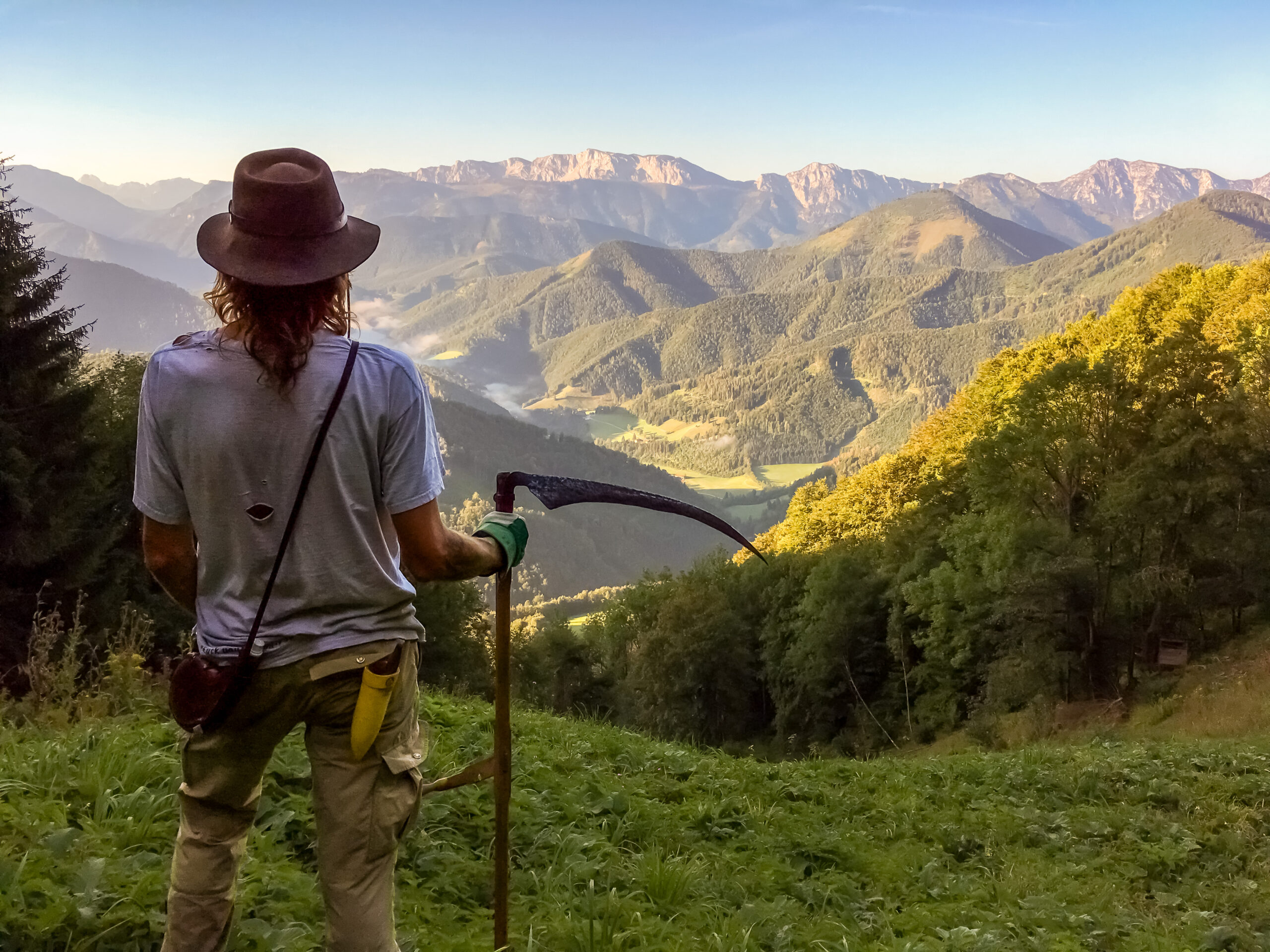
Around Molln in the Steyr valley (Upper Austria), the Bergwiesn landscape conservation association maintains meadows in difficult and steep terrain that would become overgrown with shrubs without maintenance. For my master’s thesis, I looked at how valuable these meadows are in nature conservation terms, whether the maintenance is already showing an effect and what feed value the hay has. The results were published in STAPFIA 116 in 2023.
My work
- Vegetation surveys on 26 meadows with 29 sample plots in 2019, all vascular plants identified to species level
- Classification of the plant communities and check for Habitats Directive habitat type 6210 (dry grassland on calcareous soil)
- Assessment of the biotope value using five criteria and comparison with the vegetation mapping from 2000
- GIS analysis of site factors such as elevation, aspect, slope, precipitation and solar radiation from open data
- Statistical analysis in R and estimation of the feed value
Methods & results
The meadows lie between 440 and 1,220 m above sea level. 12 of the 29 sample plots match the vegetation of nutrient-poor grassland on calcareous soil, 16 can be categorised as fertilised meadows and one as a wet meadow. 43 of the 164 plant species recorded are endangered or protected. There was no statistical relationship between biotope value and the duration of maintenance, because removing nutrients from a meadow often takes decades.
The study recommends continuing the annual mowing and removing the cut material, staggering the mowing and monitoring the development over the long term.
Preinstorfer, S., Stoeckl, N. & Bernhardt, K.-G. (2023): Naturschutzfachliche Bewertung der Pflegemaßnahmen von Wiesen auf Steilflächen in Molln (Oberösterreich). STAPFIA 116: 29–52.
Publication in Stapfia:
https://www.zobodat.at/publikation_volumes.php?id=71956
Bergwiesn landscape conservation association:
http://bergwiesn.at/
More about this service: Field mapping